Solid Perfume Box Decoration Methods: Enamel, Printing, Embossing, and Laser Marking
深圳市协兴工艺品有限公司
Contents
!Solid Perfume Box Decoration Methods: Enamel, Printing, Embossing, and Laser Marking
When a brand launches a solid perfume product, the metal container itself becomes part of the brand experience. The way you decorate that surface—through enamel filling, printing, embossing, or laser marking—directly affects how the product feels in hand, how the logo reads at retail, and how the finish holds up over months of daily carry. In this guide, we walk through each solid perfume box decoration method we run at Shenzhen Xiexing Gift, explain what it looks like, how durable it is, and where it fits best in a product line.
Why Decoration Method Matters for Solid Perfume Tins
A solid perfume tin is small—often under 50mm in diameter. That means every millimeter of visible surface carries disproportionate branding weight. The decoration method you choose determines several outcomes:
- Visual resolution: How fine can the artwork be? Gradient colors, thin lines, and small text all have different limits depending on the process.
- Tactile feel: Some methods add physical texture (enamel, embossing); others stay flush (printing, laser marking). Texture changes how the box feels when a customer picks it up.
- Durability: Daily-carry perfume tins face friction, moisture, and temperature swings. Not every decoration method survives equally well.
- Unit cost and MOQ: Complex processes like hard enamel require more labor and setup, which affects pricing and minimum order quantities.
At our 6,000㎡ facility in Shenzhen, we run these decoration processes in-house—stamping, enamel filling, pad printing, screen printing, embossing, and laser marking—so we can control quality at every step. If you want a deeper look at how these processes fit into the broader manufacturing flow, our Materials & Process FAQ covers common technical questions.
Enamel Filling: Color-Rich and Tactile
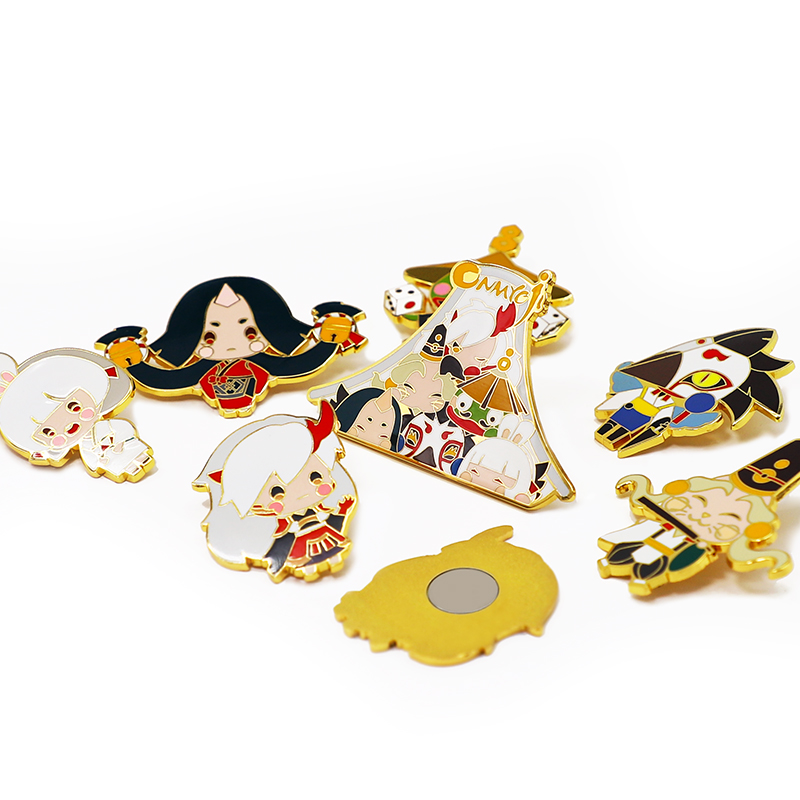
Enamel filling is one of the most popular decoration methods for metal perfume tins. The process involves stamping or casting recessed areas into the metal surface, then filling those recesses with liquid enamel paste. After curing, the result is a surface where colored areas sit slightly below (soft enamel) or level with (hard enamel) the surrounding metal.
Soft Enamel
Soft enamel leaves a noticeable ridge between the metal outlines and the filled color. You can feel the raised metal lines when you run your thumb across the surface. This tactile quality works well for vintage-style perfume tins and cultural-creative designs where texture is part of the aesthetic.
Visual effect: Slightly textured, with visible metal borders separating each color. Colors appear vibrant but have a subtle depth variation.
Durability: Good for occasional-use items. The recessed enamel is protected by the raised metal edges, but prolonged friction can wear down the surface over time. For daily-carry perfume boxes, we recommend adding an epoxy dome coating for extra protection.
Typical use case: Museum cultural gifts, vintage-style branding, designs with 3–5 bold colors and clear metal outlines. Our Custom Enamel Solid Perfume Balm Metal Box uses this method to create a starry-sky magnetic round container with rich color fills.
Hard Enamel (Cloisonné-Style)
Hard enamel is ground and polished until the surface is completely flat—you cannot feel the color boundaries with your finger. This gives a smooth, premium feel that luxury brands often prefer.
Visual effect: Smooth, glass-like finish with precise color separation. Colors are slightly more muted than soft enamel because of the polishing process.
Durability: Excellent. The polished surface resists scratching and wear better than soft enamel, making it suitable for premium perfume containers that customers carry daily.
Typical use case: High-end brand perfume tins, corporate gifting, designs requiring a smooth tactile surface.
Custom Perfume Tin Printing: Pad Printing and Screen Printing
When artwork requires fine details, gradients, or photographic elements that enamel cannot achieve, custom perfume tin printing is the go-to method. We primarily use two printing techniques on metal perfume tins: pad printing and screen printing.
Pad Printing
Pad printing uses a silicone pad to transfer ink from an etched plate onto the curved or flat surface of the tin. It handles fine lines, small text, and multi-color designs with tight registration.
Visual effect: Flat, smooth finish. Can reproduce gradients and fine details that enamel cannot. Colors are printed in sequence, so multi-color designs require precise alignment.
Durability: Moderate. The ink layer is thin compared to enamel. Without a protective clear coat, printed surfaces can scratch with daily friction. We recommend applying a UV-resistant topcoat for perfume tins that will be carried in bags or pockets.
Typical use case: Logos with fine detail, small text, multi-color brand marks on flat or slightly curved tin surfaces.
Screen Printing
Screen printing pushes ink through a mesh screen onto the tin surface. It deposits a thicker ink layer than pad printing, resulting in more saturated colors.
Visual effect: Bold, vibrant colors with a slightly raised ink feel. Best for simple designs with 1–4 solid colors.
Durability: Better than pad printing due to the thicker ink deposit. Still benefits from a protective coating for daily-wear items.
Typical use case: Bold brand logos, solid-color designs, large-area color blocks on perfume tins.
For more context on how printing fits alongside other metal decoration techniques, our article on Keychain Manufacturing Processes: Stamping, Die-Casting, and Laser Marking covers similar processes applied to other small metal products.
Embossed Perfume Box: Adding Dimension Through Stamping
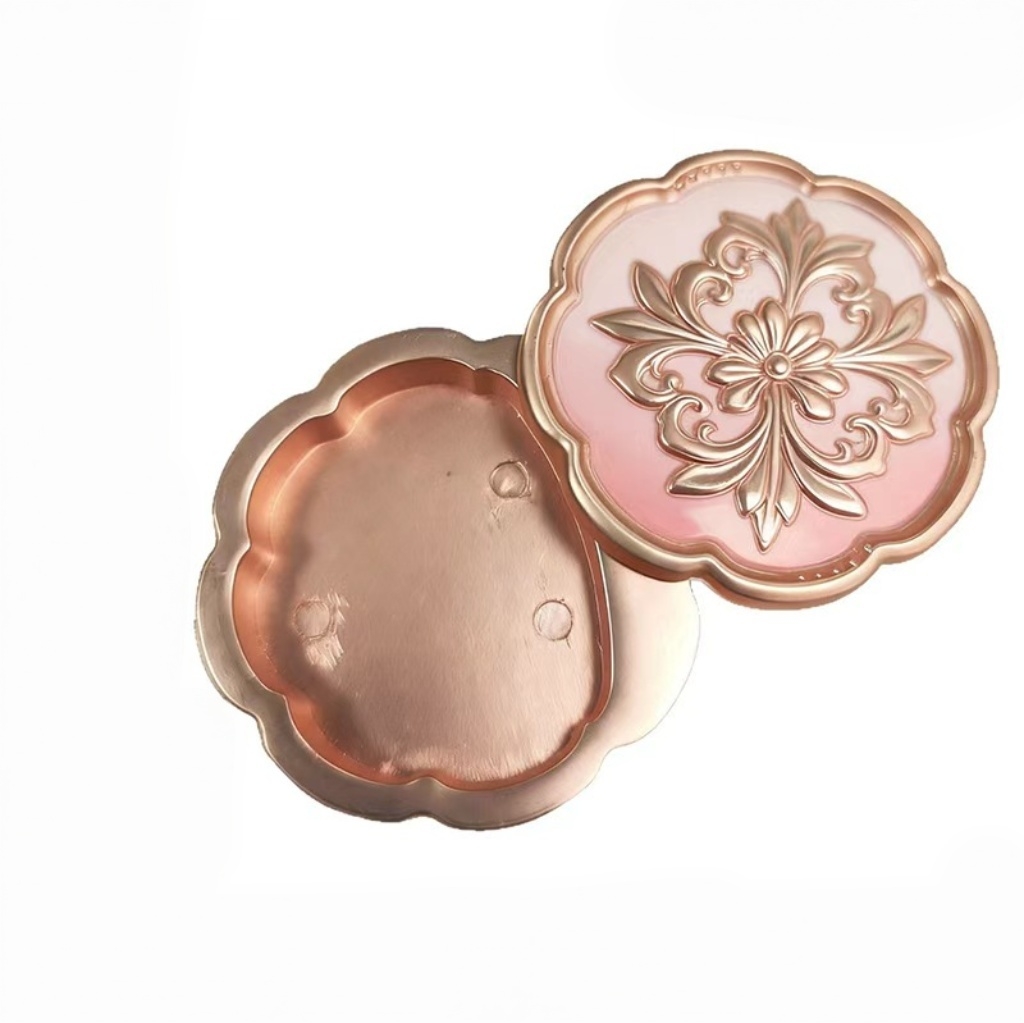
An embossed perfume box uses mechanical pressure to raise or depress specific areas of the metal surface, creating a three-dimensional design that you can see and feel. This is one of the oldest and most reliable decoration methods for metal packaging.
How Embossing Works
We place the metal blank between a male and female die set—two hardened steel molds with the design engraved in positive and negative. When the press applies force, the metal flows into the die cavities, creating raised (embossed) or sunken (debossed) areas.
Visual effect: Strong dimensional impact. Light and shadow interact with the raised surfaces, giving the design a sculptural quality that printing alone cannot achieve. Embossing works particularly well for logos, monograms, and decorative borders.
Durability: Excellent. Since the design is formed in the metal itself, it cannot rub off, fade, or peel. The dimensional detail remains intact for the life of the container.
Typical use case: Brand logos, decorative patterns, vintage-style perfume tins, designs where tactile feedback matters. Embossing is often combined with enamel filling—the raised metal borders hold the enamel in place while adding dimensional interest.
Combining Embossing with Other Methods
Embossing pairs well with nearly every other decoration method:
- Embossing + enamel: Raised metal borders define color areas (this is how soft enamel works)
- Embossing + printing: Print fine details on flat areas while the border pattern is embossed
- Embossing + laser marking: Add precise text or serial numbers on an embossed surface
This combinability is why many of our custom perfume tin projects use embossing as a base layer.
Laser Marking: Precision Without Ink
Laser marking uses a focused beam to alter the surface of the metal, creating permanent marks without adding any material. On perfume tins, we typically use fiber laser markers that can engrave at resolutions fine enough for text as small as 0.5mm.
What Laser Marking Does to Metal
The laser beam vaporizes a microscopic layer of metal, leaving a shallow engraving. Depending on the metal alloy and laser settings, the marked area can appear lighter or darker than the surrounding surface. On zinc alloy—the most common material for perfume tins—laser marks typically appear as a clean, light gray contrast against polished or plated surfaces.
Visual effect: Precise, clean lines with a subtle tonal contrast. No color—just light and dark differentiation. The mark is permanent and cannot smudge or fade.
Durability: Outstanding. Since the mark is physically etched into the metal, it survives all normal wear conditions. The only way to remove a laser mark is to grind down the metal surface itself.
Typical use case: Batch numbers, production dates, small text, fine line art, QR codes, and minimalist logo designs. Laser marking is also useful for personalization—engraving a customer name or short message on each tin.
Laser Marking on Different Surface Finishes
The visual result of laser marking varies by base material and finish:
| Surface Finish | Laser Mark Appearance |
|---|---|
| Polished silver / nickel | Light gray contrast |
| Gold plating | Slightly darker than the gold surface |
| Gunmetal / black plating | Light, almost white marks |
| Raw zinc alloy | Subtle gray tone difference |
Choosing the Right Decoration Method
Each decoration method has strengths and limitations. Here is a practical comparison to help you brief your design team:
| Method | Visual Resolution | Color Capability | Tactile Feel | Durability | Best For |
|---|---|---|---|---|---|
| Soft Enamel | Medium (bold shapes) | 3–6 solid colors | Textured, raised metal borders | Good (with epoxy coating) | Vintage designs, cultural gifts |
| Hard Enamel | Medium-high | 3–6 solid colors | Smooth, flat | Excellent | Premium brand tins, luxury gifts |
| Pad Printing | High (fine details) | Multi-color, gradients | Flat | Moderate (needs topcoat) | Detailed logos, small text |
| Screen Printing | Medium | 1–4 solid colors | Slightly raised | Good | Bold, simple designs |
| Embossing | Low-medium (shapes) | None (structural only) | Strong 3D dimension | Outstanding | Logos, borders, sculptural designs |
| Laser Marking | Very high (fine lines) | Monochrome (light/dark) | Slight engraving depth | Outstanding | Serial numbers, fine text, personalization |
Practical Selection Guide
We recommend choosing based on your primary design goal:
- Bold colors with clear outlines: Soft enamel or hard enamel.
- Fine details or gradients in the logo: Pad printing with a protective topcoat.
- Premium tactile experience: Hard enamel or embossing.
- Permanent identification marks: Laser marking.
- Maximum visual impact at retail: Combine embossing (structure) with enamel (color) and laser marking (fine text).
For a broader view of how these decoration methods fit into solid perfume packaging strategy, our article on Solid Perfume Boxes: Premium Packaging Solutions for Niche Brands covers the topic from a product positioning perspective.
Matching Decoration to Product Format
The decoration method should also match the physical format of your perfume tin. We produce several formats, each with different surface areas and curvature:
- Round flip-top tins: Flat top surface ideal for enamel and embossing. Curved sides work well with pad printing.
- Necklace pendant boxes: Small surface area favors laser marking and embossing over multi-color printing. The Hanging Solid Balm Box Portable Wearable Necklace Pendant Case for Solid Perfume & Lip Balm is a good example of decoration on a wearable format.
- Square and rectangular tins: Large flat surfaces suitable for all methods, especially screen printing and enamel.
- Special-shaped tins (triangles, pebbles, holiday themes): Irregular surfaces may limit printing area but work well with embossing and laser marking.
Our Decoration Capabilities
At Shenzhen Xiexing Gift, we have been decorating metal gift products since 2011. Our facility houses stamping presses, enamel filling stations, pad and screen printing equipment, and fiber laser markers—all under one roof. This integrated setup means we can combine multiple decoration methods on a single product without outsourcing, which keeps quality consistent and lead times short.
Key facts for buyers evaluating us as a production partner:
- MOQ for solid perfume boxes: 500 pieces, supporting small-batch brand launches
- Sampling time: As fast as 3 days for new decoration artwork
- Bulk production: Typically 7–15 days depending on decoration complexity
- Certifications: SEDEX4P and ISO9001, meeting international quality and ethical sourcing standards
- Export experience: 20 years, with products shipped to 30+ countries
If you want to learn more about our company background and capabilities, visit our About Us page.
Specifying Decoration in Your Design Brief
When briefing a decoration project, specificity speeds up sampling. Here is what we need from you to produce an accurate sample:
- Vector artwork (AI, EPS, or PDF) with clearly defined color areas
- Pantone color codes for each color in the design
- Preferred decoration method (or ask us to recommend based on your artwork)
- Surface finish preference: Polished, matte, brushed, or textured
- Durability requirements: Daily carry, display only, or gift packaging
- Any combination methods: For example, "embossed border with enamel fill and laser-marked serial number"
With this information, our design team can produce a decoration sample in as few as 3 days. We offer free design support and free sampling for qualified projects—reach out through our contact page to start the conversation.
Share this entry
FAQ
Further Reading
Solid Perfume Box Decoration Methods: Enamel, Printing, Embossing, and Laser Marking !Solid Perfume Box Decoration Methods: Enamel, Printing, Embossing, and Laser Marking When a brand launches a solid perfume product, the metal container itself becomes part of the brand experience. The way you decorate that surface—through enamel filling, printing, embossing, or laser marking—directly affects how the product feels in hand, how the logo reads at retail, and how the finish hold
_1784103723073.webp)