Small-Batch Solid Perfume Boxes for Startup Fragrance Brands
深圳市协兴工艺品有限公司
Contents
!Small-Batch Solid Perfume Boxes for Startup Fragrance Brands
Launching a fragrance brand used to mean committing to thousands of units before you even knew if customers liked the concept. That barrier is shrinking. A small batch solid perfume box program lets emerging brands test multiple designs, refine their positioning, and build inventory gradually—without the cash drain of a full production run.
At Shenzhen Xiexing Craft Gifts Co., Ltd., we have spent over a decade helping indie labels and startup fragrance brands move from concept to shelf-ready product with realistic minimums. This guide walks through how small-batch ordering works, what to expect on MOQ, and how to structure your first run.
Why Small-Batch Packaging Matters for Emerging Brands
Startup fragrance packaging is not just about protecting a product—it is the first physical touchpoint between your brand and your customer. For solid perfumes specifically, the container is the experience: the weight of the metal, the click of the lid, the visual finish on the enamel. These details communicate quality before anyone smells the fragrance itself.
The challenge for most startups is that premium metal packaging has historically required high volume commitments. Molds, tooling, and setup costs get amortized across large runs, making small orders economically unattractive for many factories. But the landscape has shifted. Brands now demand agility—testing 3 to 5 SKUs in a market before committing to scale—and manufacturers have adapted their processes to accommodate that need.
We address this directly through our small-batch customization capabilities, which are built around lowering the entry barrier for new and growing brands.
Understanding MOQ for Solid Perfume Boxes
One of the most common questions we hear from founders is: "What is the actual minimum I can order?" The answer depends on the product type, but for solid perfume boxes specifically, our MOQ starts at 500 pieces.
This is meaningfully lower than what many traditional packaging factories require, and it is designed to serve the realities of a startup budget. Here is how that compares across our product categories:
| Product Category | Typical MOQ |
|---|---|
| Trophies & Medals | 10 pieces |
| General custom gifts (badges, keychains, etc.) | 100 pieces |
| Solid perfume boxes (香膏盒) | 500 pieces |
The reason solid perfume boxes carry a higher floor than simpler items like badges is straightforward: each box involves multi-step processes including die-casting, polishing, plating, enamel filling, and assembly. The setup per design is more complex, so the minimum needs to cover that overhead.
That said, 500 pieces is still a genuine small-batch number in the context of metal packaging. For a startup testing two or three fragrance concepts, this means a total commitment of 1,000–1,500 units across SKUs—manageable for most seed-stage or bootstrapped brands. This is what we mean by low MOQ perfume packaging: not the lowest number on paper, but the lowest number that still delivers production-grade quality at a viable cost.
For more detail on how pricing scales with quantity, see our MOQ & Pricing FAQ.
How to Launch Your First Small Batch: A Step-by-Step Roadmap
We have refined this process across hundreds of projects. Here is the roadmap we recommend for startup brands ordering their first run.
Step 1: Define Your Container Concept
Solid perfume packaging comes in several structural formats. The most common options we manufacture include:
- Round flip-top tins with interior mirrors
- Oval swivel compacts with 360° rotation
- Pendant-style wearable cases that double as necklaces
- Multi-grid modular boxes for fragrance + balm + ring combinations
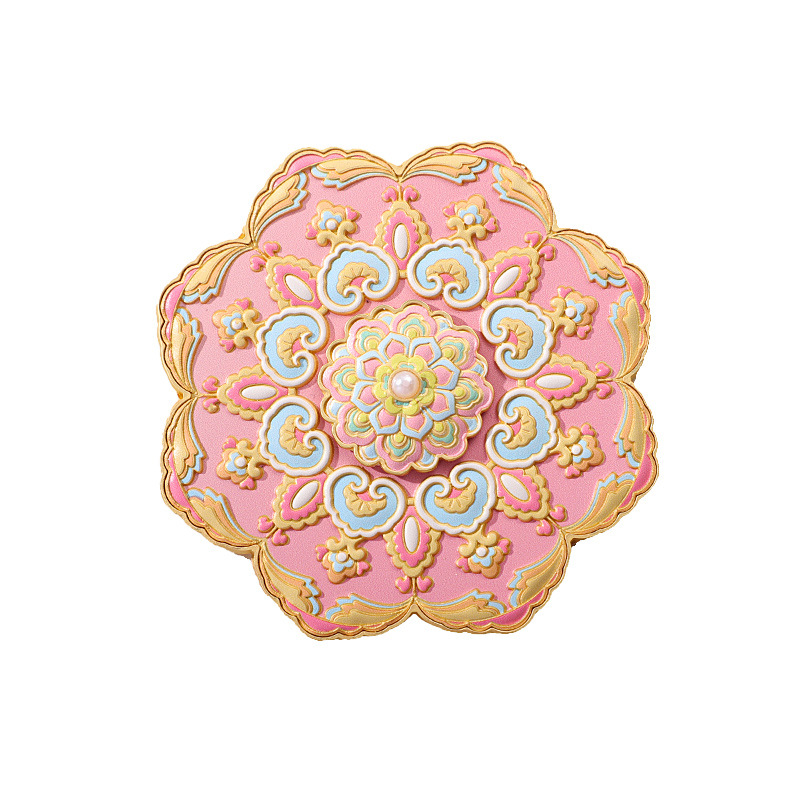
Each format serves a different brand narrative. A minimalist indie label might choose a simple round tin; a luxury-leaning brand might opt for a cloisonné enamel box with beaded bezel detailing.
Step 2: Submit Your Design Brief
Our design team works with you to translate brand elements—logos, color palettes, patterns—into production-ready artwork. This service is free, and we provide complimentary samples so you can evaluate the physical result before committing to bulk.
Sampling typically takes 3 days for new designs. This speed matters because it compresses your decision cycle: you can hold a physical prototype in your hand within a week of finalizing artwork.
Step 3: Confirm Samples and Place the Batch Order
Once you approve the sample, we move to production. Our standard turnaround for batch production is 7 to 15 days, depending on order volume and process complexity.
Step 4: Quality Inspection and Delivery
Every order passes through our in-house quality inspection before shipping. We operate under ISO9001 and SEDEX 4P certifications, which means our quality management and ethical sourcing practices meet internationally recognized standards.
Multi-SKU Ordering: Test Before You Scale
One of the most valuable aspects of a small-batch program is the ability to run multiple SKUs in parallel. Instead of betting everything on one design, you can test variations:
- Different shapes: round vs. oval vs. triangular
- Different finishes: soft enamel vs. hard enamel vs. cloisonné
- Different branding approaches: debossed logo vs. enamel-filled logo vs. laser-engraved
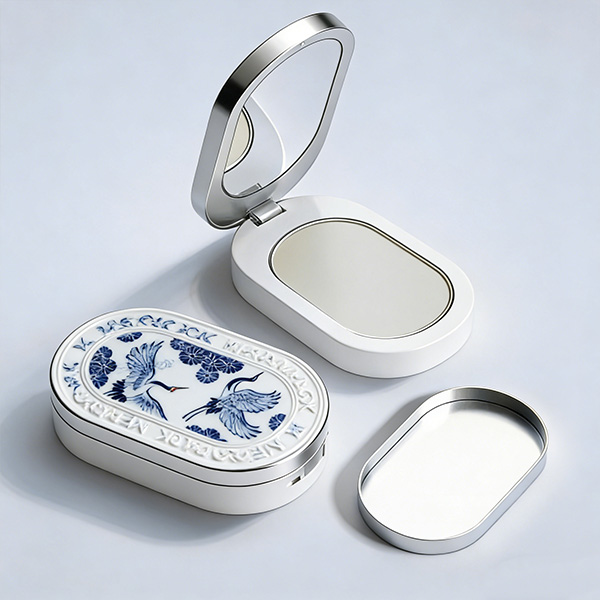
For example, you might order 500 units of a custom logo solid perfume container in a round format, alongside 500 units of a Hanging Solid Balm Box Portable Wearable Necklace Pendant Case for Solid Perfume & Lip Balm that functions as wearable packaging. Two SKUs, two market positions, one production cycle.
This multi-SKU approach is particularly useful for brands selling at pop-ups, markets, or online, where you can gather real customer feedback on which design resonates before scaling to larger volumes.
Material and Process Options for Low-Volume Orders
Even at small batch quantities, you have access to the full range of manufacturing techniques we offer. There is no "economy tier" that limits you to basic stamping. The processes available include:
| Process | Visual Effect | Best For |
|---|---|---|
| Soft enamel | Textured, recessed color fill | Heritage or vintage-style brands |
| Hard enamel | Smooth, polished surface | Premium luxury positioning |
| Cloisonné | Multi-color, glass-like finish | High-end gift or collector editions |
| 3D relief | Sculpted, dimensional detail | Brand mascots or architectural motifs |
| Laser engraving | Precise, permanent marking | Minimalist or industrial aesthetics |
| Dual-color injection | Two-tone plastic components | Playful or contemporary brands |
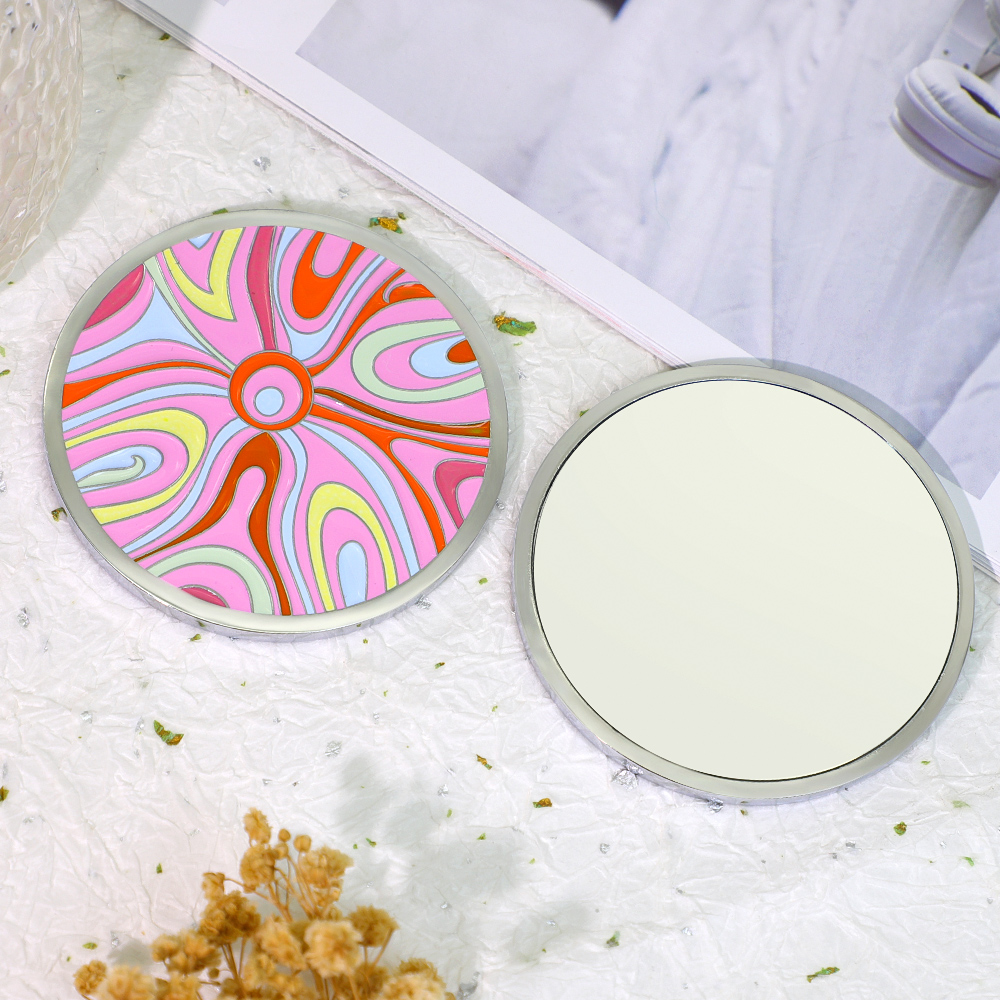
Our custom logo metal solid perfume container is a good reference for how these processes combine in a single product: zinc alloy base, enamel fill, mirror insert, and custom branding.
For brands exploring private label options, our Packaging & Private Label FAQ covers the most common questions about branding, labeling, and compliance.
Realistic Expectations: What Small-Batch Ordering Will and Will Not Do
Setting accurate expectations is part of how we build trust with startup clients. Here is what a small-batch program delivers—and where it has limits.
What it does well:
- Lets you test market response with real product in hand
- Provides professional, shelf-ready packaging at accessible volumes
- Allows design iteration between batches
- Keeps inventory lean and cash flow manageable
Where to be realistic:
- Per-unit cost at 500 pieces will be higher than at 5,000—this is inherent to manufacturing economics, not a markup
- Custom mold fees may apply for entirely new shapes; existing tooling libraries reduce this cost
- Lead times can fluctuate during peak production seasons (typically Q3–Q4)
If you want a deeper look at how premium packaging fits into niche brand strategy, our article on solid perfume boxes as premium packaging solutions covers the design and positioning considerations in more detail.
Actionable Takeaways for Your First Order
If you are a startup or indie fragrance brand preparing your first packaging order, here is what we recommend:
- Start with 1–2 SKUs at the 500-piece MOQ rather than committing to a single large run. This preserves capital for marketing and inventory turnover.
- Request physical samples before bulk production. A rendering cannot tell you how a box feels in the hand or how the enamel color reads under retail lighting.
- Choose a container format that aligns with your retail channel. Wearable pendant cases work well for direct-to-consumer and gift markets; compact mirror-style boxes suit boutique and online sales.
- Plan for a second batch. If your first design performs well, scaling up to 1,000–2,000 units in the next run will improve your per-unit cost significantly.
We are happy to discuss your specific project. Reach our team at 0755-84851470 or sales@xiexingift.com to start the conversation, or visit our contact page for more options.
Share this entry
Further Reading
Small-Batch Solid Perfume Boxes for Startup Fragrance Brands !Small-Batch Solid Perfume Boxes for Startup Fragrance Brands Launching a fragrance brand used to mean committing to thousands of units before you even knew if customers liked the concept. That barrier is shrinking. A small batch solid perfume box program lets emerging brands test multiple designs, refine their positioning, and build inventory gradually—without the cash drain of a full production run. At Shenzhen Xi